Office Clear in London
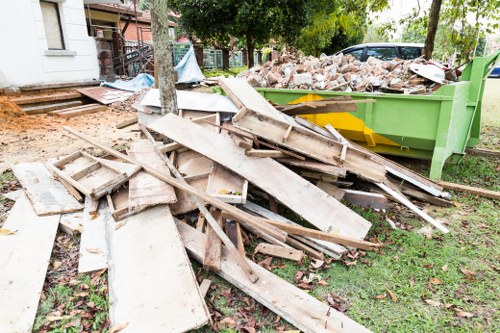
Office Clear in London provides a focused office clearance service for workspaces that need desks, chairs, filing cabinets, IT equipment, archive material or general commercial clutter removed in a planned and orderly way. The service is suited to businesses that want office contents cleared with attention to access, separation of items and sensible handling of reusable and recyclable materials. We support clear-outs for single rooms, whole floors and larger premises, with practical options for furniture removal, waste collection and disposal.
For many customers, the key requirement is to restore usable space without turning the process into a disruption. That means the clearance needs to be organised around the items present, how they are stored and what should be kept, moved or removed. If you are comparing approaches, our office clearance service gives a straightforward starting point, while related pages such as office clearances and London office clearance areas help you narrow the right option for the property and its location.
When you are ready to move from planning to action, it helps to think in terms of what needs clearing, what can be recycled and whether the building has any access restrictions that shape the job. A concise list of items is usually enough to begin a quotation request, and if your project also includes mixed office waste or residual rubbish, pages such as commercial waste collection and waste removal explain adjacent services that may be relevant to your booking.
What our office clearance covers
Office clearances often involve more than simply moving furniture out of the door. A typical job can include dismantling or separating desks, removing storage units, handling filing systems, and clearing leftover items from break rooms, meeting rooms, reception areas and back offices. We also deal with mixed contents where a single space contains both reusable furniture and general rubbish, so the clearance can be organised around the actual layout of the premises rather than around one fixed formula.
The service can suit routine changes, larger office moves and one-off clear-outs after consolidation or refurbishment. Where needed, the work can be planned so that heavier objects are removed first and smaller loose items are collected afterwards. Customers sometimes prefer to break the project into stages; in those cases, a combined approach using furniture removal and collection alongside bulky waste collection can be a practical way to keep the process focused on the specific items present.
We do not assume that every office contains the same mix of contents. Some spaces mainly hold desks, shelving and chairs, while others include archived files, printers, cupboards, monitors or white goods. Clear separation matters because it helps identify what is suitable for reuse, recycling or disposal. In many cases, the most helpful first step is to think about categories rather than individual objects: large furniture, electrical items, archived paper, loose rubbish and anything needing careful removal.
Furniture, fixtures and equipment
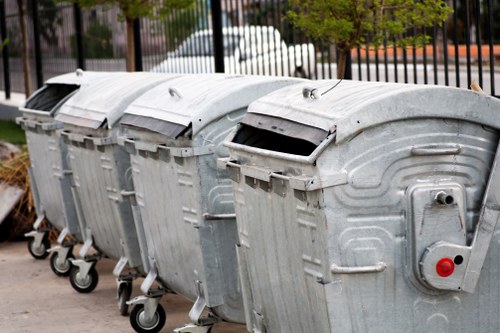
Furniture is often the largest part of an office clearance, and it usually needs the most physical handling. Desks, meeting tables, office chairs, lockable cabinets and storage units may all require different lifting, dismantling or carrying methods. In some buildings, items must be removed in a particular order because of lifts, stairwells, shared entrances or narrow corridors. A careful approach helps protect the premises while making sure the clearance stays controlled.
Equipment clearance can involve computers, screens, printers, telephones and accessories that should not be treated as ordinary rubbish without thought. Where electrical items are present, it is useful to separate them early so they can be managed correctly. Our pages on white goods recycle, fridge disposal and bed disposal are examples of the wider range of item-specific services available on the site, and they show how different object types may need different handling.
Some customers are mainly looking to remove one type of item, while others need a full room emptied and then tidied for handover. If the office clearance is part of a broader property change, related services such as property clearance and home clearance can be useful references for understanding how mixed contents are approached. The important point is that each item is considered against the overall goal: keep, move, recycle or remove.
Commercial waste, disposal and recycling
Office clearance often produces a combination of reusable items and waste that must be separated before disposal. That may include paper, packaging, plastic, old stationery, broken office equipment and items that no longer have a practical use. A clear sorting process helps keep the job efficient and supports responsible disposal decisions. We also offer services that sit alongside clearance, such as commercial waste disposal and waste disposal, for jobs where the main need is removal rather than clearance of an entire workspace.
Recycling considerations matter because offices frequently contain materials that can be handled differently depending on their condition and type. Cardboard packaging, paper records, metal furniture parts and some electrical components may all need separate treatment. Pages including recycling and rubbish and waste recycling reflect this broader approach. The aim is not to promise a particular recycling outcome for every item, but to show that the service can be organised with sorting and disposal in mind.
For many commercial customers, the practical question is whether the clearance can be matched to the contents on site. That is especially important where the office is partly occupied, where items are spread across several rooms, or where there is a mixture of furniture and refuse. In those cases, the service can be structured so that the removal follows the site’s actual contents, with clear distinctions between objects to retain, objects to move and items to remove from the premises.
How to prepare for a quotation

Preparing a quotation request for office clearance does not need to be complicated. A short description of the premises, the main items present and any access details is usually enough to begin. It can help to note whether the clearance involves a single room, an open-plan area, storage space or several floors, because the layout affects how the work needs to be organised. Where there are awkward access points or mixed contents, that information is worth including early.
Photographs or a simple inventory can be useful if you are trying to describe desks, filing cabinets, monitors, shelving, archive boxes or surplus office furniture. If the job includes specialist items, it is wise to mention them clearly rather than bundling everything together under a generic description. You may also wish to review pricing and quotes if you want to understand the general factors that shape a quotation, or check contact us when you are ready to send the details through. Request a quotation when you have the space mapped out.
There is no need to prepare a long explanation. The most useful notes are often the simplest: what needs removing, how much of it there is, whether the work is urgent, and whether there are any limitations around parking, lifts or shared access. If you are comparing service pages, office clearance Acton and office clearance Westminster show how the service can be presented for specific London areas, while still following the same core clearance process.
Furniture clearance in offices and workplaces
Furniture clearance is a central part of most office clearance work, but it deserves its own focus because the items are often bulky and varied. Office chairs may be light but numerous, while filing cabinets and cupboards are heavier and may need careful handling. Boardroom tables, reception seating and shelving units can also present access challenges that affect the sequence of removal. We approach these jobs with the aim of keeping the clearance orderly from first lift to final load.
Where furniture is in reasonable condition, it may be better suited to reuse or redeployment than to disposal. A customer may wish to move part of a workstation setup to another floor, retain certain desks for a later fit-out, or clear only selected meeting-room pieces. In that context, furniture clearance and furniture disposal are useful companion pages, because they show the difference between removing an item from the room and deciding how it should then be handled.
Not every office contains standard furniture. Some premises hold reception counters, benching systems, storage walls or items fixed more closely into the space. These may need a different removal sequence, particularly where there is limited room to manoeuvre. A sensible clearance plan allows time for separation, safe lifting and the practical steps needed to take the items out without unnecessary disturbance to the rest of the building.
Office contents and special cases
Some office clearances involve contents that are not typical desks and chairs. Archiving rooms, secure storage areas, utility cupboards and staff kitchens can all add complexity. The job may include paper records, boxed archives, catering equipment, shelving, old appliances or mixed office waste collected over time. In these cases, the work is best treated as a structured contents clearance rather than as a simple emptying exercise.
Where a site contains items that have been left for a long period, sorting can be more involved. You may need to decide what is being retained for legal, operational or records reasons, and what is ready for removal. For larger or more cluttered premises, the broader services on office clearance Barnet and office clearance Shoreditch can be used as examples of location-based service pages within the same site structure, each supporting a different part of London.
There can also be instances where a clearance links with probate, change of use or business restructuring. The site includes related pages such as probate clearance and probate house clearance, which are not office services but do illustrate how different clearance situations may require different priorities. For a commercial workplace, the key remains the same: understand the contents, decide what stays, and remove what no longer belongs on site.
About London

London is a large and historically layered city shaped by the River Thames, a long sequence of expansion beyond the old City boundaries, and a landscape of districts that each retain distinct identities. The metropolitan area includes the ancient core around the City and Westminster, later residential and industrial growth in the east and south, and a broad outer ring of suburbs that developed through rail and road connections. Its built environment mixes medieval survivals, Georgian terraces, Victorian civic architecture, interwar estates and contemporary towers, often within a few streets of one another. Landmark areas such as the Strand, Covent Garden, the South Bank, the West End and the Docklands each reflect different periods of commercial, cultural or maritime change. Museums, theatres, galleries and concert halls sit alongside markets, squares, churchyards and public parks, while the Thames continues to shape routes, views and settlement patterns. Green spaces such as Hyde Park, Regent’s Park, Hampstead Heath and Greenwich Park provide major open areas within the urban fabric, and smaller commons, gardens and squares appear throughout the boroughs. The city’s transport system, with its Underground lines, mainline termini, buses and river crossings, reinforces the sense of London as a network of connected places rather than a single uniform centre. Cultural life remains varied, with institutions ranging from the British Museum and Tate Modern to neighbourhood libraries, performance venues and local markets. At the same time, the city’s history is visible in its street plan, place names and conservation areas, where narrow lanes, market streets, industrial warehouses and mansion blocks sit beside newer redevelopment. London is also defined by the contrast between formal administrative geography and lived neighbourhood identity, meaning that areas like Camden, Brixton, Wapping, Kensington or Hackney can each feel distinct while remaining part of the same wider capital.
Clearance for offices and commercial premises
Office clearances are often only one part of a wider property management process. A workplace may need a single suite emptied before refurbishment, a floor cleared during relocation, or a back-office area tidied after a change in team size. The service can be adapted to the property’s condition and the items present, with the practical aim of making the space ready for its next use. That can mean removing old furniture, reducing clutter, or taking away waste that has built up over time.
For commercial sites, the job sometimes extends beyond ordinary office furniture. Stock rooms, display areas, paperwork storage and staff facilities can all create different removal needs. If you are comparing related service types, commercial waste collection and business waste removal are useful references because they sit close to clearance work without being identical to it. The distinction matters when you want an area emptied properly rather than simply having loose waste taken away.
A good result depends on matching the service to the room, the contents and the level of sorting required. Some customers want a neat end state after everything has been removed; others mainly need the clearout completed so decorators, contractors or new occupiers can begin. Either way, the objective is the same: remove what has to go, keep what remains, and leave the premises ready for its next stage.
Office clearance options for different sites

Because workplaces vary so much, office clearance needs to stay flexible. A small professional office may have only a handful of desks and chairs to remove, while a larger multi-room premises may include reception furniture, filing systems, kitchen equipment and store cupboards. The service can therefore be adjusted to the scale of the site without changing the underlying approach, which is to handle each item in a sensible order and separate different material types where appropriate.
Customers sometimes ask whether a clearance should be arranged as a room-by-room process or as one larger removal. The answer depends on access, the quantity of items and what needs to remain in place. If you are assessing other pages on the site, office clearance Waterloo, office clearance Canary Wharf and office clearance Camden show how the service is presented in different parts of the capital, while still pointing to the same core office-clearance work.
Request a quotation when you have a clear sense of the items, the layout and the access arrangements. If your project involves both office furniture and mixed waste, it may also be worth looking at rubbish removal and waste clearance so you can decide whether you need a broad clearance or a more itemised combination of services. We are ready to help you choose the right route for the property and its contents.
Choosing the right clearance approach
Choosing an office clearance approach is mostly about matching the method to the contents rather than forcing the contents into a fixed method. If the space contains standard office furniture, the work may be fairly direct. If it also contains archived files, appliances, fixtures or stored materials, the plan should account for the different handling each item requires. That is why a short, accurate description of the job is more useful than a long list of assumptions.
Some customers want to phase the work. They may retain selected items for a later move, remove only the surplus furniture, or clear waste separately from reusable office contents. In those situations, related pages such as waste collection, rubbish collection and large item collection can help you judge where clearance ends and straightforward collection begins. A measured approach tends to save confusion when multiple item types are involved.
Useful details for a quotation can be summarised quickly:
- the number of rooms or floors involved
- the main furniture and equipment to remove
- any access, parking or lift considerations
- whether the job includes recycling, disposal or both
- the preferred timing for the clearance
Make your office clearance enquiry
Whether you are clearing a compact office, a shared workspace or a larger commercial property, the service is designed to deal with the contents in a tidy, structured way. The most useful starting point is a simple description of what is on site and what you want removed. From there, the quotation can be shaped around the actual work required, including furniture, equipment, waste and any special handling that the property calls for.
If you would like to compare nearby service pages or confirm the kind of work covered, office clearance in London and office clearance West Hampstead provide further route options within the same site. For general company information, about us and insurance and safety are available, while pricing and quotes remains the place to look if you want to shape the details before sending them through.
When you are ready, ask for a quotation and include the items, the layout and any access notes that matter. That is usually enough to begin. If the office needs a straightforward clear-out or a more complex removal plan, the next step is simple: send the details and let us help you move it forward.